
“Kennedy Agyapong Won’t Respect Ghanaians if He Becomes President of Ghana”: Adwoa Safo Warns

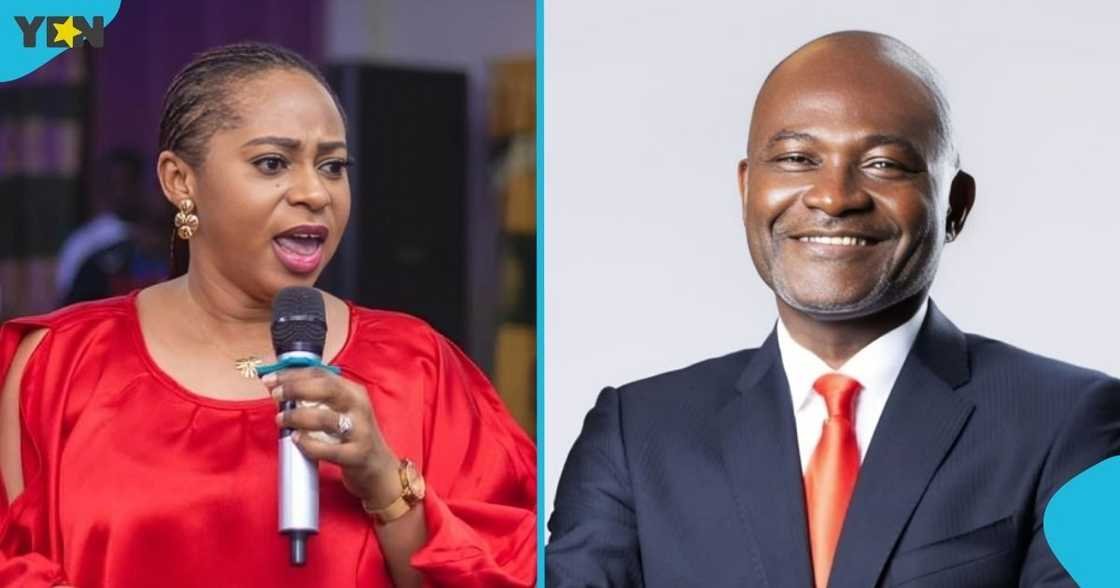
“Kennedy Agyapong Won’t Respect Ghanaians if He Becomes President of Ghana”: Adwoa Safo Warns
A social media post circulating widely online has sparked fresh controversy in Ghana’s political space, bringing an unverified personal allegation involving former Dome-Kwabenya MP Adwoa Safo and businessman Kennedy Agyapong into public discussion as attention turns toward the 2028 elections.
The post, shared by the Facebook page GF ICON, attributes a provocative comment to Safo concerning an alleged past intimate relationship with Agyapong, who is considered a potential presidential contender. The purported statement suggests that Agyapong’s alleged conduct in private would raise questions about how he might treat Ghanaians if elected president.
The claim has spread across Facebook and WhatsApp, prompting a range of reactions, including criticism, mockery, and speculation about its political implications. However, there is no independent confirmation that Safo made the alleged remarks. Neither she nor Agyapong has publicly addressed the claim in the information provided.
The absence of verification has not prevented the post from becoming part of the wider political conversation. Some critics of Agyapong have used the allegation to question his suitability for national leadership, while his supporters have dismissed it as a potentially damaging attempt to undermine his political ambitions. Without credible evidence, however, the claim cannot be treated as an established account of events.
The controversy has also raised concerns about privacy and the treatment of women in politics. Some observers argue that circulating unsubstantiated claims about a politician’s personal life can expose individuals to unfair scrutiny, while others maintain that discussions about a public figure’s character should be based on reliable evidence rather than viral posts.
More broadly, the episode highlights the influence of social media in shaping political narratives before claims have been independently verified. Posts shared rapidly across digital platforms can generate widespread debate, even when their accuracy remains uncertain.
Until credible evidence emerges or the individuals concerned respond, the alleged statement should be regarded as unverified. The incident nevertheless underscores the need for caution when sharing politically sensitive claims, particularly as Ghana approaches another election cycle.
Dr. Bawumia Under Fire: Allegations of Hubtel Ownership and Electricity Payment Scandal
Awudu Mahama, Managing Editor of The Custodian, has questioned whether any action was taken against individuals who alleged that former Vice President Dr. Mahamudu Bawumia owned shares in Hubtel and received part of the proceeds from electricity payments.
Speaking in a recent interview, Mahama said the allegations had attracted considerable public attention but raised questions about whether those responsible had faced investigations or other consequences. He argued that the public deserves clarity on claims involving prominent political figures and the management of funds.
The allegations, which circulated on social media and some news platforms, linked Bawumia to Hubtel, a Ghanaian digital payments and utility services company. They also suggested that some revenue generated through electricity transactions had been channeled to him. However, the claims remain allegations and should not be treated as established facts without credible supporting evidence.
Mahama acknowledged the importance of freedom of expression in a democratic society but stressed that serious accusations should be handled responsibly. He argued that where credible concerns arise, the relevant authorities should establish the facts rather than allow speculation to continue unchecked.
The issue has renewed discussion about the responsibilities of journalists, public commentators, and state institutions when allegations are made against political leaders. While individuals should be able to raise legitimate concerns, unsubstantiated claims can damage reputations and mislead the public.
Legal consequences for making false statements depend on the circumstances and applicable law, making it important to distinguish between protected expression, allegations made in good faith, and statements that may attract liability.
The report also indicated that Bawumia’s office had not publicly confirmed or denied the alleged ownership claims. No verified outcome of an investigation or official finding was provided in the material.
Mahama’s intervention has therefore placed renewed emphasis on transparency, evidence, and accountability. The central question remains whether the allegations were properly examined and whether reliable information can establish their accuracy.
The debate highlights the need for both responsible public discussion and credible institutional responses when claims involving public figures and financial transactions emerge.