
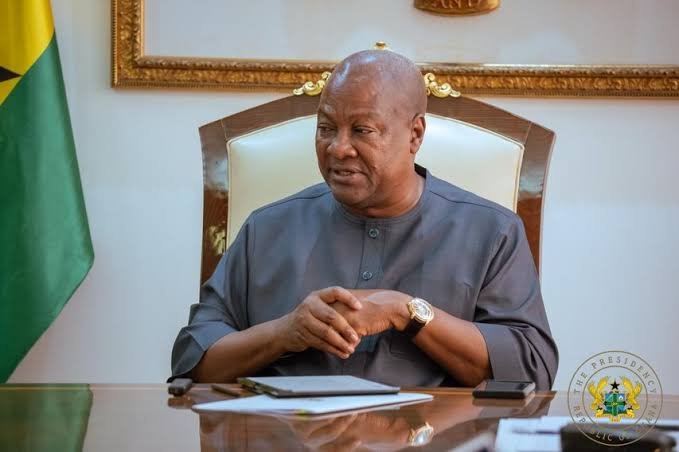
“President Mahama Will ‘Collapse’ If NPP Exposes His Corrupt Activities” – Kwesi Kyei
Former Ashanti Regional Communications Director of the New Patriotic Party (NPP), Kwesi Kyei, has accused President John Mahama’s administration of corruption and warned that revealing what he described as evidence of wrongdoing could seriously undermine the government’s credibility.
Speaking at a party engagement in Kumasi, Kyei alleged that the scale of corruption and mismanagement under the current administration was troubling. He argued that a comprehensive disclosure of the alleged activities could place significant pressure on the President and his government.
Kyei also raised concerns about government contracts, particularly in the energy and agricultural sectors, claiming that some had been affected by inefficiency and questionable dealings. He said the NPP had been gathering information about alleged irregularities that could be made public.
According to the former party communications director, releasing the material could affect public confidence in the administration and intensify scrutiny of how state resources and contracts are managed. However, the claims presented in his remarks were not accompanied by specific evidence in the account provided.
His comments reflect the continuing political tension between the NPP and the governing National Democratic Congress (NDC), as both parties seek to strengthen their positions in Ghana’s political landscape. The NPP has increasingly presented itself as a critic of the government’s handling of public affairs, while allegations of misconduct remain a recurring source of political controversy.
Kyei maintained that his concerns went beyond partisan competition, arguing that citizens had a right to understand how public funds were being used. He called on Ghanaians to demand transparency and accountability from those entrusted with public office.
He stressed that responsible management of state resources was essential to good governance and said the party’s efforts should focus on protecting the country’s interests rather than merely scoring political points.
The allegations have added to the debate over accountability and public-sector management in Ghana. Whether the NPP will release the evidence Kyei referred to, and how the relevant authorities might respond, remain unclear. Any claims of corruption would require independent verification and due process before conclusions could be drawn about the conduct of specific officials.
The Degree Of Incompetence Under Mahama Is Not Just Embarrassing But Very Frightening – J. A. Sarbah
Social commentator J. A. Sarbah has issued a sharp condemnation of the Mahama administration following revelations by Minister for the Interior Muntaka Mohammed-Mubarak regarding the state of narcotics detection equipment at Ghana’s ports.
Speaking during an interview on Joy FM’s Super Morning Show, Interior Minister Muntaka revealed that the current administration inherited a security deficit where no specialized electronic gadgets or scanners were available at port facilities to detect illicit narcotics.
Reacting in a Facebook post published on October 12, 2026, titled “The degree of incompetence under Mahama is not just embarrassing but very frightening,” Sarbah expressed profound outrage over what he characterized as a dangerous misallocation of state resources and misplaced governmental priorities.
Sarbah argued that it is unacceptable for a sovereign nation to lack basic narcotics detection infrastructure at critical entry and exit points while state apparatuses allegedly invest resources in digital surveillance tools to track and arrest social media critics. He asserted that such operational deficiencies expose Ghana to international reputational damage and leave national borders highly vulnerable to transnational drug syndicates.
The commentary reflects a growing public debate surrounding border security, state capacity, and institutional modernization. Analysts note that the absence of functional scanner technology at major maritime and border ports severely weakens customs enforcement, intelligence gathering, and international law enforcement cooperation.
Sarbah concluded that effective governance requires prioritizing core national security mandates over political convenience. His widely discussed post serves as an urgent call for systemic administrative reforms, emphasizing that state resources must be directed toward modernizing border security infrastructure, enforcing institutional accountability, and safeguarding public safety across all national ports.

No Comments